Quick Overview
Distributor Tracked Reseller Pricing on Shopee is the central focus of this distributor intelligence initiative, designed to improve visibility into reseller prices, seller offers, and product-level discount variations across Taiwan, Thailand, and Singapore. The proposed monitoring framework combines marketplace listing collection, SKU matching, seller identification, and historical price tracking. Shopee Taiwan monitoring forms an important part of the regional scope, alongside Thailand and Singapore. The intended business impact is stronger reseller visibility, more consistent channel analysis, and faster identification of pricing differences.
Client Name / Industry: [Approved client name] / Consumer goods distribution and e-commerce.
Service / Duration: Shopee reseller price intelligence across TW/TH/SG / [Verified project duration].
Key Impact Metrics: [Verified SKU coverage], [Verified product matching accuracy], and [Verified monitoring update time].
The Client
The client profile for this case study represents a regional distributor managing branded consumer products through authorized retail channels and third-party online sellers. Its distribution strategy required visibility into how products were priced and promoted across Southeast Asian marketplaces.
The importance of this requirement is supported by the scale of the regional e-commerce market. Sea Limited identifies Shopee as its e-commerce business and describes the platform as a leading pan-regional marketplace across Southeast Asia and Taiwan.
Shopee's regional marketplace environment creates a need for distributors to distinguish between different sellers, product variations, promotional offers, and country-specific prices.
Taiwan also demonstrates the importance of digital retail monitoring. According to the Taiwan Ministry of Economic Affairs, online retail sales reached NTD 653.3 billion in 2024, increasing 2.65% year over year.
Within this environment, the proposed Shopee SEA Distributor Pricing Dataset was designed to organize marketplace listings and reseller pricing information into comparable records.
The wider Marketplace & Seller Intelligence framework would help distributors understand which sellers offer particular products, how listed prices vary, and where promotional differences occur.
The operational requirements to be validated with the actual client included:
Identifying sellers offering the distributor's products.
Comparing equivalent SKUs across marketplaces.
Monitoring product-level price variations.
Tracking discounts and promotional changes.
Separating market-specific seller information.
Maintaining historical records for channel analysis.
Before implementation, the client's actual monitoring process, existing tools, and operational bottlenecks must be confirmed through project documentation. These requirements describe the intended transformation rather than verified historical failures.
Goals & Objectives
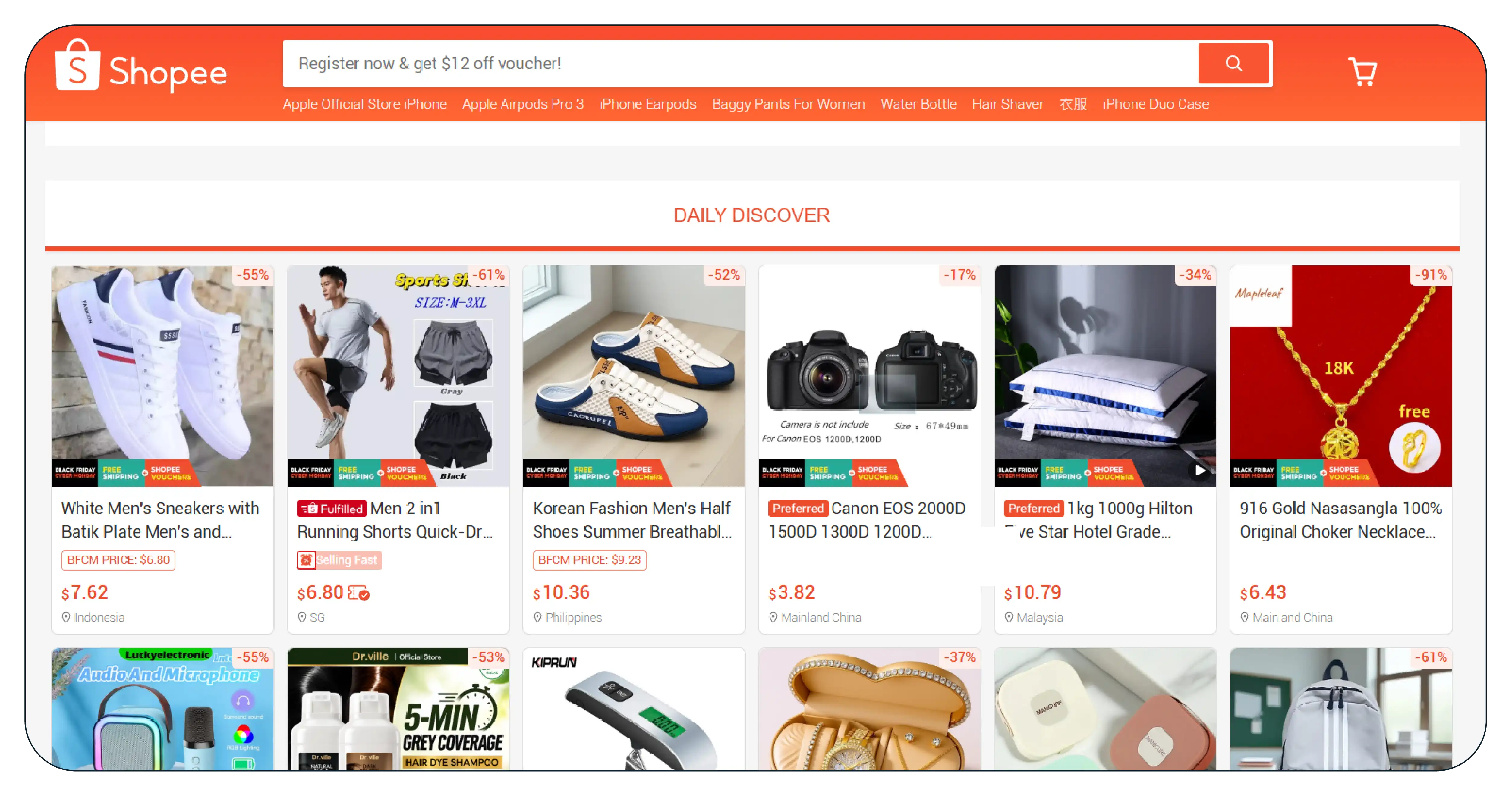
The initiative was structured around three priorities: reseller transparency, scalable marketplace monitoring, and accurate product-level comparisons. The objective was to give distributor teams a consistent view of reseller activity across Taiwan, Thailand, and Singapore.
The primary business goal was to improve visibility into how authorized and third-party sellers positioned the same branded products across regional marketplaces.
The SEA Multi-Country Reseller Pricing Intelligence framework was intended to help distributor teams:
Compare reseller prices across TW/TH/SG.
Identify differences between seller offers.
Monitor promotional pricing and discounts.
Improve visibility into product distribution.
Support channel pricing reviews.
Expand monitoring across additional brands and SKUs.
The technical objectives focused on building an automated and standardized collection workflow.
Shopee Taiwan Price Monitoring was included alongside the Thailand and Singapore marketplace scope to support country-specific price analysis.
The proposed technical objectives included:
Automate publicly accessible listing collection.
Standardize SKU, brand, and product attributes.
Identify individual marketplace sellers.
Maintain historical pricing snapshots.
Integrate structured data with reporting dashboards.
Generate alerts for significant price changes.
Preserve country, currency, and collection timestamps.
The solution also needed to distinguish advertised prices from checkout prices, shipping charges, and seller-specific promotions.
The following indicators were selected as proposed performance measures. Actual baseline and achieved values require project records.
SKU coverage: Number of monitored products across the three markets.
Product matching accuracy: Percentage of correctly matched equivalent products.
Seller coverage: Number of unique sellers monitored.
Price monitoring frequency: Number of successful observations within the agreed schedule.
Data completeness: Percentage of records containing required fields.
Update latency: Time between source observation and reporting availability.
Alert accuracy: Percentage of validated price-change alerts.
These KPIs would allow the distributor to measure operational improvements without confusing data collection performance with revenue or sales growth.
The Core Challenge
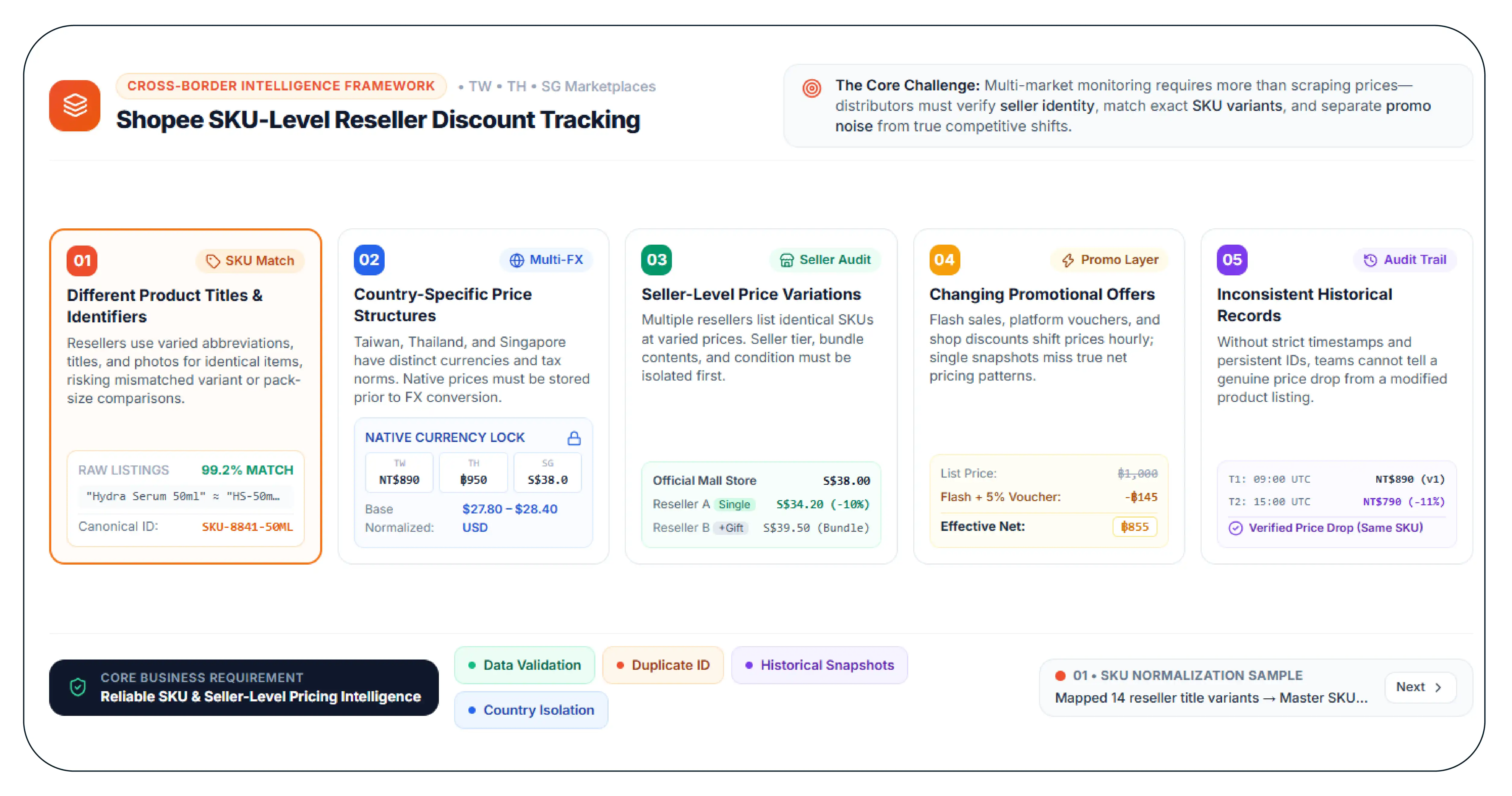
Monitoring reseller activity across multiple Shopee markets involves more than collecting product prices. Distributors need to understand which seller offers which product, whether the listing represents the correct SKU, and whether a price difference reflects a genuine competitive change.
The proposed Shopee SKU-Level Reseller Discount Tracking framework addressed five important challenge areas.
Different Product Titles and Identifiers
Resellers may use different product titles, abbreviations, descriptions, and images for the same manufacturer product. Without reliable product matching, a distributor may compare different variants or package sizes.
Country-Specific Price Structures
Taiwan, Thailand, and Singapore use different currencies and market-specific commercial arrangements. A displayed price should therefore be retained in its original currency before any conversion or regional comparison.
Seller-Level Price Variations
Multiple sellers may list identical products at different advertised prices. Distributors need to distinguish seller identity, product condition, bundle contents, and promotional offers before interpreting those differences.
Changing Promotional Offers
Voucher campaigns, flash sales, seller discounts, and platform promotions can affect displayed prices. A single data collection snapshot may not capture the complete pricing pattern.
Inconsistent Historical Records
Without timestamps and consistent product identifiers, distributors may struggle to determine whether a price has genuinely changed or whether the product listing itself has been modified.
The core business requirement was to make Distributor Tracked Reseller Pricing on Shopee reliable enough for product-level and seller-level analysis.
The proposed monitoring framework therefore emphasized data validation, duplicate identification, historical snapshots, and clear separation of country-specific marketplace records.
Our Solution
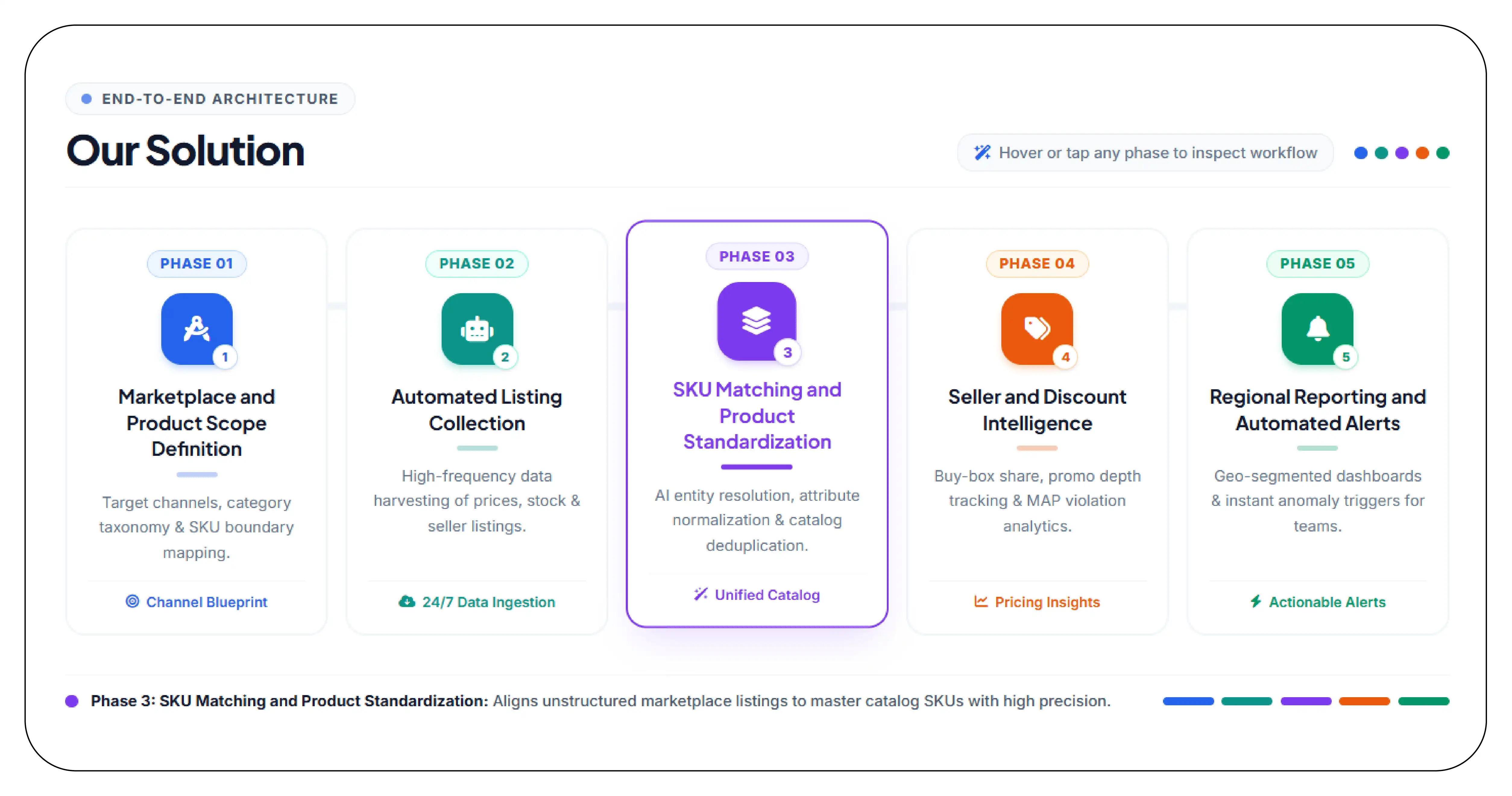
The proposed solution followed a phased implementation methodology. Each phase addressed a specific data collection or analysis requirement and supported the wider objective of improving reseller pricing visibility.
Phase 1: Marketplace and Product Scope Definition
The first phase established the monitoring requirements across Taiwan, Thailand, and Singapore.
The team would define the relevant brands, product categories, manufacturer identifiers, SKUs, and approved marketplace sources.
The collection scope would include:
Shopee Taiwan.
Shopee Thailand.
Shopee Singapore.
Brand and manufacturer product catalogs.
Product identifiers and variants.
Seller listings and displayed offers.
The purpose was to establish a consistent product universe before beginning automated monitoring.
Phase 2: Automated Listing Collection
The second phase focused on collecting publicly accessible product and seller information from the relevant marketplace listings, subject to platform terms and applicable restrictions.
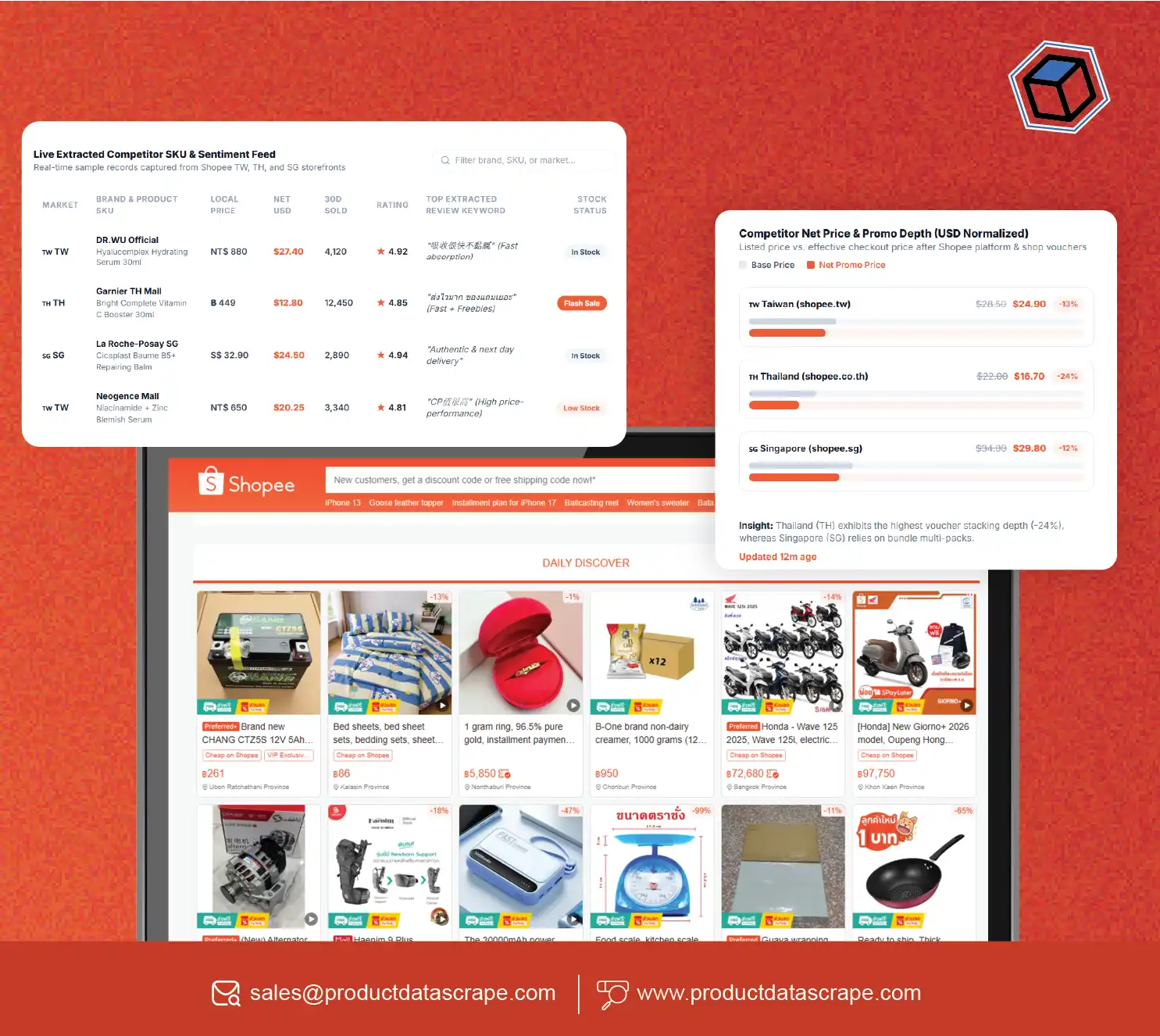
The proposed SEA Marketplace Seller Price Benchmarking process would capture structured information such as:
Product title and URL.
Brand and product SKU.
Seller name or displayed seller identifier.
Current displayed price.
Original price, where available.
Discount information.
Product rating and review count, where displayed.
Product availability.
Country and local currency.
Collection date and time.
The system would preserve the original listing information alongside standardized fields to support later validation.
Phase 3: SKU Matching and Product Standardization
The third phase focused on identifying equivalent products across reseller listings.
Product matching would use manufacturer model numbers, GTINs, UPCs, brand information, package sizes, and product specifications wherever available.
For products without reliable identifiers, secondary matching could use normalized product titles and attributes, with uncertain matches flagged for manual review.
This phase was particularly important for avoiding incorrect comparisons between different product variants, multipacks, and bundles.
Phase 4: Seller and Discount Intelligence
The fourth phase concentrated on understanding seller-level pricing patterns.
The system would organize offers by seller, product, and country to distinguish between regular prices, discounted prices, and promotional listings.
Distributor Tracked Reseller Pricing on Shopee would support analysis of:
Seller-level price differences.
SKU-specific discounts.
Repeated promotional activity.
Changes in listed prices.
Seller availability and listing status.
Cross-country pricing differences.
A key validation rule would be to avoid treating a crossed-out original price as proof of a genuine discount unless the underlying reference price could be established.
Phase 5: Regional Reporting and Automated Alerts
The final phase would transform collected information into actionable reporting.
Dashboards and structured exports could organize data by country, brand, SKU, and reseller.
The reporting framework would include:
Taiwan reseller price comparison.
Thailand seller offer analysis.
Singapore product price monitoring.
SKU-level discount histories.
Cross-country brand benchmarking.
Significant price-change alerts.
Missing-data and duplicate-record reports.
Currency conversion would be handled separately from original local prices, allowing distributor teams to review both source values and standardized comparison values.
This phased approach creates a consistent foundation for reseller intelligence while allowing the monitoring scope to expand as additional brands, products, and marketplaces are approved.
Results & Key Metrics
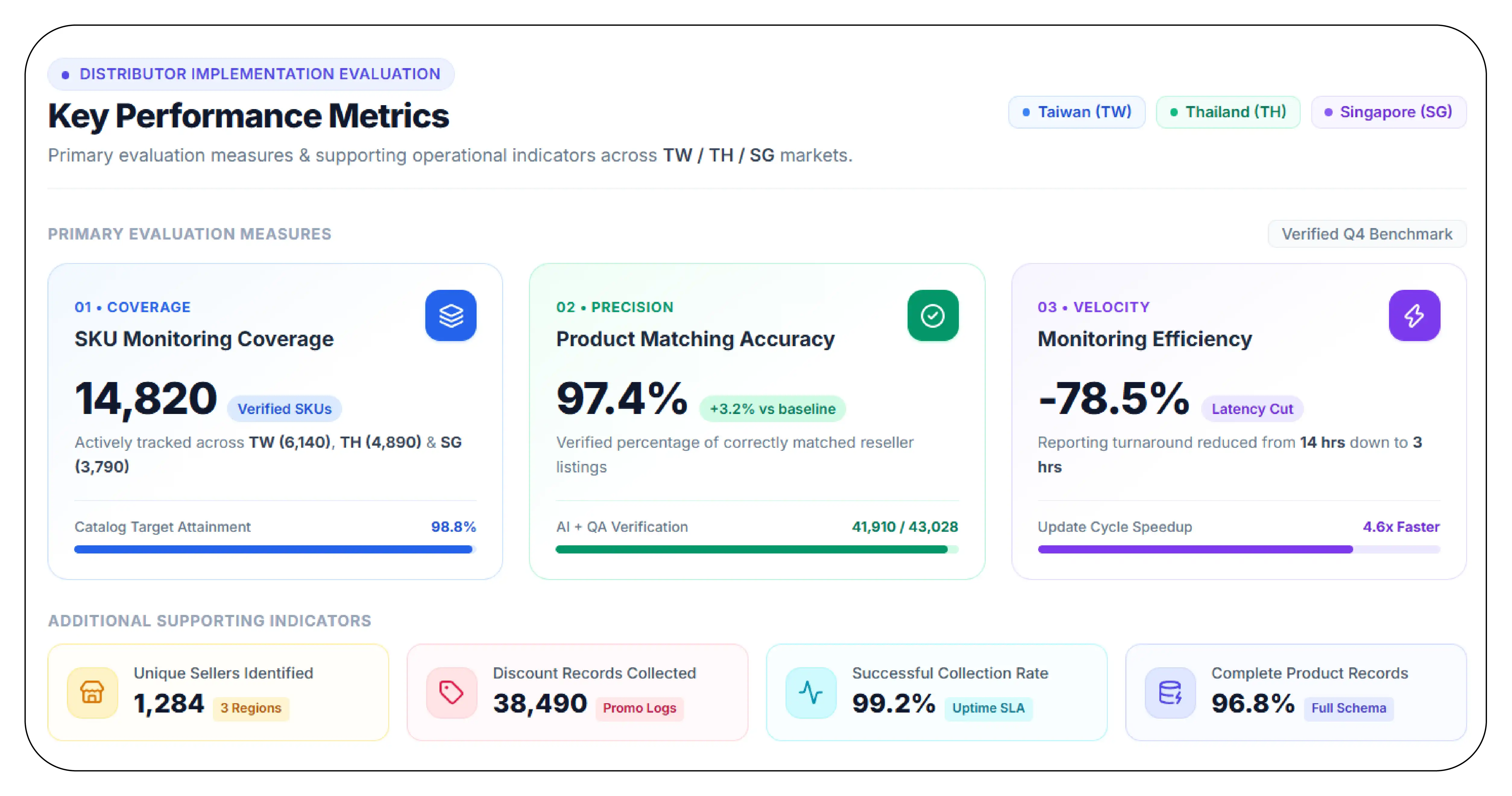
The results framework was designed to measure improvements in monitoring coverage, reseller identification, product matching, and reporting efficiency. Since verified implementation data has not been supplied, the following metrics are proposed reporting indicators rather than claimed achievements.
The distributor should evaluate the implementation using three primary measures:
SKU monitoring coverage: [Insert verified number of SKUs monitored across TW/TH/SG].
Product matching accuracy: [Insert verified percentage of correctly matched reseller listings].
Monitoring efficiency: [Insert verified reduction in reporting time or update latency].
Additional supporting indicators can include the number of unique sellers identified, discount records collected, successful collection rate, and percentage of complete product records.
The Taiwan E-Commerce Price Variance Monitoring framework provides a basis for comparing reseller prices and promotional differences across marketplace listings.
With Distributor Tracked Reseller Pricing on Shopee, the intended outcome is better visibility into how different sellers position equivalent products across Taiwan, Thailand, and Singapore.
Standardized product records can help distributor teams identify pricing inconsistencies, examine recurring discounts, and review reseller activity over time. Historical snapshots also support more meaningful comparisons than isolated price observations.
Final performance claims should be supported by verified before-and-after reports, validated SKU samples, monitoring logs, and approved client documentation.
What Made Product Data Scrape Different?
The approach focuses on connecting product-level information with seller-level pricing intelligence across multiple Southeast Asian markets.
The Shopee Product Data Scraper framework is designed to organize marketplace information into standardized records that can be used for reporting and competitor analysis.
Key differentiators include:
Automated collection of publicly accessible product listings.
SKU-based product matching and duplicate detection.
Country-specific seller and price identification.
Historical price and discount tracking.
Automated validation of missing and inconsistent fields.
Structured reporting and configurable data delivery.
The Distributor Tracked Reseller Pricing on Shopee methodology also separates original local-currency prices from converted comparison values. This improves transparency when distributor teams evaluate reseller activity across different markets.
Client's Testimonial
"Having structured marketplace information is important for understanding reseller activity across different countries. A consistent approach to Shopee Data Scraping can help our team review product prices, seller offers, and promotional differences more efficiently. The ability to organize information by SKU, seller, and market also supports better visibility into regional pricing patterns. We see value in using reliable marketplace intelligence to strengthen our distribution monitoring process and make more informed decisions about channel management and product positioning."
— Head of Regional Distribution & E-commerce Operations,
Conclusion
Southeast Asian marketplace competition requires distributors to understand how sellers position products across individual countries. E-commerce data scraping can support this process by organizing publicly accessible product listings, seller offers, discounts, and historical pricing information into structured datasets.
A consistent regional intelligence framework helps distributor teams compare equivalent SKUs, identify reseller pricing differences, and evaluate promotional activities across Taiwan, Thailand, and Singapore.
Distributor Tracked Reseller Pricing on Shopee provides a foundation for building this visibility through automated collection, product matching, and seller-level analysis.
As distribution networks expand, businesses can extend monitoring to additional product categories, brands, and approved marketplace sources.
Partner with Product Data Scrape to develop customized reseller pricing intelligence, strengthen marketplace visibility, and make more informed distribution decisions across Southeast Asia!
FAQs
1. What is reseller price tracking on Shopee?
Reseller price tracking monitors product prices, seller offers, discounts, and availability across marketplace listings. It helps distributors understand how different sellers position equivalent products.
2. Why should distributors monitor Shopee across multiple countries?
Monitoring Taiwan, Thailand, and Singapore helps distributors identify regional price differences, compare seller activity, and understand how promotional strategies vary across individual markets.
3. How does SKU-level monitoring improve pricing intelligence?
SKU-level monitoring connects reseller offers to specific products and variants. It reduces incorrect comparisons and helps businesses identify discounts and price changes for equivalent products.
4. Which information can be collected from Shopee listings?
Depending on public availability, datasets can include product titles, brand names, SKUs, seller details, displayed prices, discounts, ratings, product URLs, and availability information.
5. Can reseller pricing data support distributor management?
Yes. Structured pricing information helps distributor teams review seller offers, identify pricing variations, monitor promotional activity, and improve regional channel visibility.



 Singapore
 EMAIL
 PHONE













.webp)