Introduction
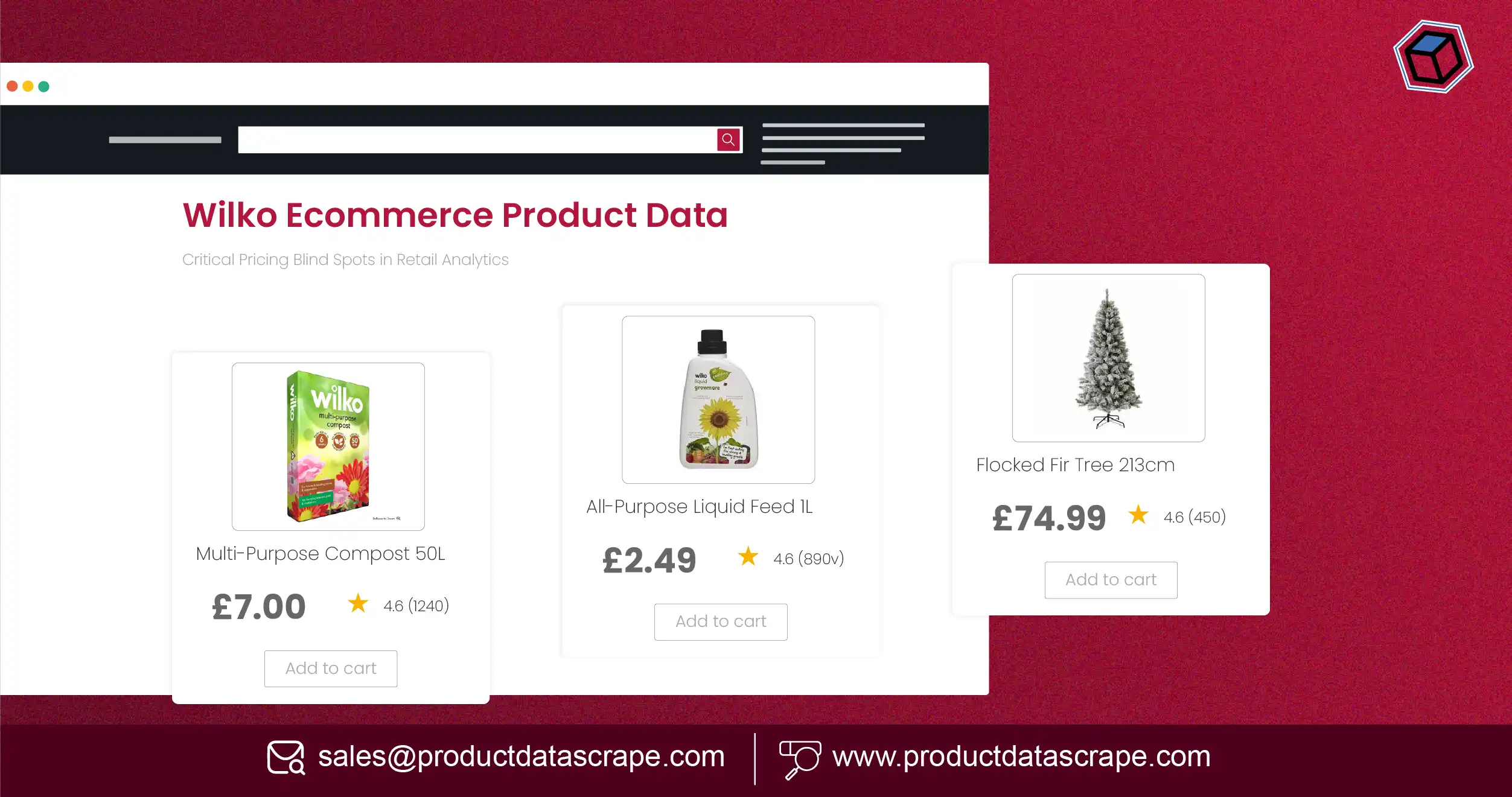
Businesses use Extract Wiko Store Electronics Price Data solutions to monitor pricing trends, track inventory changes, and improve ecommerce decision-making in 2026. Retailers gain real-time insights into product pricing, promotions, and customer demand to optimize profitability and market competitiveness.
According to retail industry reports, over 81% of ecommerce businesses now rely on automated analytics tools to improve pricing accuracy and customer targeting. Companies also use Scrape Data From Any Ecommerce Websites technologies to collect structured product datasets for competitor benchmarking, trend forecasting, and inventory optimization.
This blog is designed for ecommerce brands, retail analysts, electronics sellers, and marketplace intelligence providers seeking better pricing visibility and digital shelf performance. The biggest challenge for these businesses is maintaining real-time competitor monitoring and adapting quickly to changing online retail trends.
How Can Smartphone Product Monitoring Improve Online Visibility?
Retailers increasingly depend on smartphone product intelligence to improve merchandising and competitor analysis. Businesses use solutions to Scrape WIKO smartphone product data for tracking specifications, pricing updates, and product availability across ecommerce marketplaces.
Companies also rely on Digital Shelf Analytics to measure search visibility, monitor product rankings, and improve online product discoverability. These insights help brands optimize digital shelf performance and increase customer engagement.
Smartphone Ecommerce Analytics Trends (2020–2026)
| Year |
Smartphone Listings Monitored |
Digital Shelf Adoption |
Conversion Rate Growth |
| 2020 |
1.2 Million |
31% |
2.5% |
| 2021 |
1.6 Million |
39% |
3.1% |
| 2022 |
2.1 Million |
48% |
3.9% |
| 2023 |
2.7 Million |
57% |
4.7% |
| 2024 |
3.4 Million |
66% |
5.5% |
| 2025 |
4.1 Million |
75% |
6.3% |
| 2026 |
4.9 Million |
84% |
7.2% |
Retail brands improve online visibility by:
- Monitoring search rankings
- Tracking competitor listings
- Optimizing product descriptions
- Improving product image quality
- Measuring promotional performance
Digital shelf monitoring helps ecommerce businesses identify underperforming products and improve customer conversion rates. In 2026, product visibility analytics has become essential for ecommerce growth and marketplace competitiveness.
Why Is Real-Time Price Tracking Important for Ecommerce Brands?
.webp)
Pricing changes rapidly in competitive ecommerce markets. Businesses increasingly use WIKO smartphone price tracking systems to monitor competitor prices, promotional discounts, and regional pricing differences in real time.
Retailers also leverage Web Scraping API Services to automate product pricing collection and access structured ecommerce datasets at scale. API-driven solutions improve pricing accuracy and reduce manual monitoring efforts.
Ecommerce Price Monitoring Growth (2020–2026)
| Year |
Average Monthly Price Changes |
Dynamic Pricing Adoption |
Automated Data Collection Usage |
| 2020 |
12 |
25% |
33% |
| 2021 |
16 |
32% |
41% |
| 2022 |
21 |
40% |
50% |
| 2023 |
27 |
49% |
59% |
| 2024 |
33 |
58% |
68% |
| 2025 |
40 |
67% |
77% |
| 2026 |
48 |
76% |
86% |
Businesses use price tracking intelligence to:
- Compare competitor pricing
- Optimize promotional strategies
- Improve profit margins
- Detect market trends faster
- Adjust dynamic pricing models
Real-time pricing analytics supports faster decision-making and improved ecommerce competitiveness. In 2026, automated pricing intelligence remains a key factor in online retail success.
How Does API-Based Data Extraction Support Retail Analytics?
Modern ecommerce businesses require scalable data collection systems. Retailers increasingly use Wilko Ecommerce API Data Extraction solutions to gather structured product information, seller data, and inventory insights efficiently.
Businesses also depend on Pricing Intelligence Services to analyze price fluctuations, competitor discounts, and category-level pricing trends. These solutions help brands improve strategic planning and maximize revenue opportunities.
API-Driven Retail Analytics Statistics (2020–2026)
| Year |
API Data Requests Daily |
Retail Analytics Adoption |
Pricing Automation Usage |
| 2020 |
8 Million |
35% |
22% |
| 2021 |
11 Million |
43% |
30% |
| 2022 |
15 Million |
52% |
39% |
| 2023 |
20 Million |
61% |
48% |
| 2024 |
26 Million |
70% |
57% |
| 2025 |
33 Million |
79% |
66% |
| 2026 |
41 Million |
88% |
75% |
API-powered retail intelligence enables businesses to:
- Automate product monitoring
- Analyze category performance
- Improve forecasting accuracy
- Monitor seller activities
- Optimize pricing strategies
Automated data extraction reduces operational complexity and supports real-time ecommerce analytics. Retailers using API-based intelligence solutions gain better visibility into competitor performance and customer demand patterns.
How Can Product Listing Intelligence Improve Marketplace Performance?
.webp)
Product listing optimization directly impacts ecommerce sales performance. Businesses increasingly use technologies to Scrape Wilko Product Listings and Prices for monitoring assortment changes, promotional campaigns, and competitor strategies.
Listing intelligence provides visibility into product descriptions, category rankings, customer engagement, and discount trends across online marketplaces.
Product Listing Analytics Growth (2020–2026)
| Year |
Product Listings Tracked |
Promotion Monitoring Usage |
Ecommerce Optimization Adoption |
| 2020 |
18 Million |
29% |
34% |
| 2021 |
24 Million |
37% |
42% |
| 2022 |
31 Million |
46% |
51% |
| 2023 |
39 Million |
55% |
60% |
| 2024 |
48 Million |
64% |
69% |
| 2025 |
58 Million |
73% |
78% |
| 2026 |
69 Million |
82% |
87% |
Retailers improve listing performance by:
- Monitoring pricing changes
- Analyzing product availability
- Tracking customer engagement
- Measuring competitor promotions
- Improving search visibility
Marketplace intelligence tools help ecommerce brands identify gaps in digital merchandising strategies. In highly competitive ecommerce environments, product listing analytics supports better customer targeting and revenue optimization.
Why Is Ecommerce Trend Monitoring Important for Growth?
Consumer preferences change quickly in online retail markets. Businesses increasingly use WIKO ecommerce trend monitoring solutions to identify emerging product categories, monitor seasonal demand, and improve forecasting strategies.
Trend monitoring helps brands understand customer purchasing patterns and adapt inventory planning more effectively.
Ecommerce Trend Analytics Statistics (2020–2026)
| Year |
Trend Forecast Accuracy |
Consumer Demand Monitoring Usage |
Predictive Analytics Adoption |
| 2020 |
53% |
28% |
21% |
| 2021 |
59% |
35% |
29% |
| 2022 |
66% |
44% |
38% |
| 2023 |
72% |
53% |
47% |
| 2024 |
78% |
62% |
56% |
| 2025 |
84% |
71% |
65% |
| 2026 |
90% |
80% |
74% |
Businesses use trend monitoring to:
- Identify trending products
- Forecast seasonal demand
- Improve inventory planning
- Monitor customer interests
- Optimize marketing campaigns
AI-powered trend intelligence enables retailers to respond quickly to market shifts and improve customer engagement. In 2026, ecommerce trend analytics has become a major driver of retail growth and operational efficiency.
How Does Pricing Analytics Help Electronics Retailers Compete?
.webp)
Electronics pricing changes frequently due to market competition and promotional campaigns. Businesses increasingly rely on WIKO electronics pricing analytics to monitor competitor pricing and optimize revenue strategies.
Retailers use pricing analytics to evaluate discounts, compare category-level performance, and improve margin management across ecommerce platforms.
Electronics Pricing Intelligence Trends (2020–2026)
| Year |
Electronics Products Monitored |
Dynamic Pricing Adoption |
Revenue Optimization Growth |
| 2020 |
5 Million |
24% |
11% |
| 2021 |
6.7 Million |
32% |
16% |
| 2022 |
8.5 Million |
41% |
22% |
| 2023 |
10.4 Million |
50% |
29% |
| 2024 |
12.8 Million |
59% |
36% |
| 2025 |
15.3 Million |
68% |
43% |
| 2026 |
18 Million |
77% |
51% |
Electronics pricing intelligence helps businesses:
- Improve promotional planning
- Compare competitor pricing
- Increase revenue opportunities
- Monitor pricing trends
- Reduce pricing inconsistencies
Advanced pricing analytics systems now use AI forecasting to automate pricing adjustments and improve profitability. Ecommerce businesses leveraging pricing intelligence achieve faster decision-making and stronger market competitiveness.
Why Choose Product Data Scrape?
Businesses trust Product Data Scrape for scalable ecommerce intelligence and advanced pricing analytics solutions. We specialize in helping brands Extract Wiko Store Electronics Price Data with real-time visibility into pricing trends, inventory changes, and competitor activity across ecommerce platforms.
Our Extract Wilko Ecommerce Product Price Data solutions support digital shelf monitoring, pricing optimization, marketplace intelligence, and ecommerce trend forecasting. We deliver accurate datasets, scalable API integrations, and automated monitoring technologies designed for modern ecommerce businesses.
Our retail intelligence solutions help brands improve operational efficiency, optimize pricing strategies, and strengthen digital marketplace performance.
Conclusion
Modern ecommerce success depends on accurate pricing intelligence, trend monitoring, and structured retail analytics. Businesses using a reliable Ecommerce Product Dataset gain critical insights into product performance, pricing fluctuations, and customer purchasing behavior.
Advanced Extract Wilko Ecommerce Product Price Data solutions enable retailers to improve pricing strategies, optimize inventory planning, and strengthen competitive positioning across digital marketplaces. We provide scalable ecommerce intelligence solutions tailored for brands, retailers, and marketplace analytics providers.
Contact Product Data Scrape today to unlock smarter ecommerce analytics and transform your pricing intelligence strategy with advanced retail data solutions!
FAQs
1. What is ecommerce product price data extraction?
Ecommerce product price data extraction collects pricing, inventory, and product information from online marketplaces to support retail analytics, competitor monitoring, and dynamic pricing optimization strategies.
2. Why do ecommerce brands monitor competitor pricing?
Brands monitor competitor pricing to optimize product pricing strategies, improve promotional planning, maintain market competitiveness, and maximize profitability using real-time retail intelligence insights.
3. How does digital shelf analytics improve ecommerce visibility?
Digital shelf analytics improves search rankings, product discoverability, and customer engagement by analyzing marketplace listings, promotional performance, pricing consistency, and content optimization strategies.
4. What benefits does ecommerce trend monitoring provide?
Trend monitoring helps businesses forecast demand, identify popular product categories, improve inventory planning, and respond quickly to changing customer purchasing behavior in online retail markets.
5. How does Product Data Scrape support ecommerce analytics?
Product Data Scrape provides scalable data extraction solutions for pricing intelligence, inventory tracking, trend monitoring, and marketplace analytics to help ecommerce brands improve operational performance.



 Singapore
 EMAIL
EMAIL
 PHONE
PHONE


.webp "thumb")
.webp "thumb")








.webp)